🕐 Same-Day Service Available | 🌿 Pet & Child Safe | 📋 Health Canada Compliant | 🏠 Serving Vancouver Since 1996 | 🛡 Licensed & Insured
⚡ SAME-DAY ANT REMOVAL SERVICE
Ant Control & Carpenter Ant Removal in Vancouver
Carpenter ants damage Vancouver homes silently — by the time you see workers in spring, the colony is often 3+ years old and already nesting in your walls. Get a licensed technician to identify the species, locate the nest, and stop the damage before it spreads
30+ Years Protecting Greater Vancouver Homes
Carpenter Ants · Odorous House Ants · Pavement Ants · Pharaoh Ants | Family-Safe Methods
★ 5.0 Google Rating · ⚡ Same-Day Service · 🛡 Licensed & Insured · 🏠 Family-Safe
Call Us (604) 580-2847Schedule Free Quote🕐 Response time: Under 4 hours for ant emergencies
About Ant Control in Vancouver
Why Vancouver Homes Get Ant Problems (And Why DIY Sprays Don't Work)
Vancouver’s mild, wet climate keeps wood damp year-round — and damp Douglas fir framing is exactly what carpenter ants are looking for. Older homes in East Vancouver, Kitsilano, and Mount Pleasant are especially vulnerable: a single mature carpenter ant colony can contain 3,000+ workers and typically takes 3 to 6 years to establish, meaning by the time you see foraging workers, the nest inside your walls is already mature.
The reason store-bought sprays fail is simple — they kill the foragers you can see, not the queen and brood hidden in wall voids, sub-floors, or moisture-damaged wood. Carpenter ants also build satellite colonies, so treating one trail just pushes activity to another part of the home. Wait too long and you’re not just dealing with a pest problem — you’re paying for structural repairs to studs, joists, and window frames.
Ridall has been treating ant infestations across Metro Vancouver for over 30 years. Every job starts with positive species identification — carpenter, odorous house, pavement, or pharaoh — because the treatment for each is completely different. From there, our technicians use targeted, non-repellent baits and direct nest treatments, and you walk away with a written report documenting exactly what we found and what we did. Call us before the colony spreads.
Signs You Have an Ant Problem
01 Sawdust-Like Frass Near Wood
Carpenter ants don’t eat wood — they tunnel through it and push out fine, sawdust-like debris called frass. Look for small piles near baseboards, window frames, and crawl spaces.
02 Large Black Ants Foraging at Night
Carpenter ants are most active after dark. Spotting 6–12mm black or reddish-black ants in your kitchen at night is a strong indicator of a colony nearby.
03 Hollow Sound in Structural Wood
Tap suspected studs, joists, or window frames with the handle of a screwdriver. A hollow or papery sound often means active galleries inside.
04 Winged Swarmers Indoors in Spring
Winged reproductive ants appearing inside your home from April to June indicate a mature, established colony — not a stray scout from outside.
05 Faint Rustling Inside Walls
A quiet, dry rustling sound inside walls or ceilings — especially at night — is the sound of workers moving through galleries. Easily missed but rarely a coincidence.
🐜 Species We Treat
The 4 Ant Species We Treat in Vancouver Homes
Different ant species require completely different treatments — carpenter ants need wood-targeted intervention, while pharaoh ants need slow-acting baits. Our technicians identify the species before any product is applied.
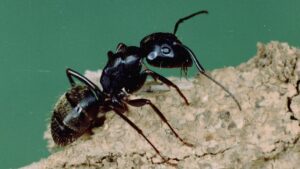
Carpenter Ant
Camponotus modoc
The most destructive ant in Metro Vancouver. They tunnel through damp structural wood — Douglas fir framing, window sills, and roof beams — to build satellite colonies that spread throughout the home.
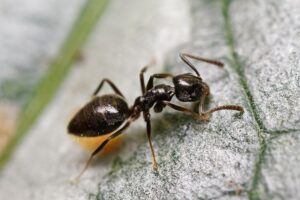
Odorous House Ant
Tapinoma sessile
Tiny dark brown ants that release a sharp blue-cheese smell when crushed. Almost always seen trailing across kitchen counters, around sinks, and into pet food.
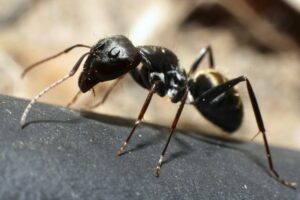
Pavement Ant
Tetramorium caespitum
Small brown-black ants that nest under driveways, patios, and sidewalk slabs, leaving small mounds of soil at cracks. They forage indoors for grease and sweets, especially in basements.
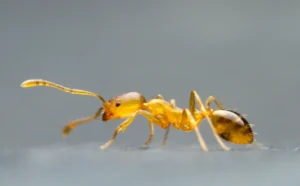
Pharaoh Ant
Monomorium pharaonis
Pale yellow-brown ants are particularly difficult to eliminate because disturbing the colony causes it to “bud” into multiple new colonies. Frequently found in heated buildings and shared walls in older Vancouver homes.
⚙ Our Proven Process
Our 4-Step Ant Removal Process
We don’t just spray and leave. Every ant job follows a documented 4-step process designed for full colony elimination and long-term prevention.

Inspection & Species Identification
Every job starts with a full inspection so we can confirm exactly what species you have and where they’re nesting. Treating the wrong species — or treating without finding the nest — is the single biggest reason DIY and budget pest control fails on ants.
✅ Visible trails, frass, and damage check
✅ Moisture mapping (carpenter ants need damp wood)
✅ Entry-point and harborage inspection
✅ Positive species ID before any product is applied

Strategy
We use non-repellent gel baits and dusts that ants carry back to the queen, eliminating the colony at its source rather than just killing the foragers you can see. The product, formulation, and placement are matched to the species we identified.
✅ Non-repellent gel baits placed on active trails
✅ Dust treatments injected into wall voids
✅ Perimeter exterior treatment for re-entry prevention
✅ Direct nest treatment when accessible

Nest Elimination & Verification
We don’t just treat the trail — we follow the activity back to the primary nest and any satellite colonies, then return to verify the queen and brood have been eliminated. For carpenter ants, this often means accessing wall voids and crawl spaces.
✅ Primary and satellite nest treatment
✅ Re-inspection of previously active areas
✅ Activity monitoring at known trails
✅ Confirmation queen and brood are gone

Prevention & Written Report
This is where most pest companies stop. We finish every job with a written treatment report, photos of what we found, and moisture remediation advice — so you know what was done and how to keep ants out for good.
✅ Written report with photos and findings
✅ Moisture and entry-point remediation advice
✅ Exclusion sealing recommendations
The Ridall Experience
Choosing the right pest control company makes all the difference. See why Vancouver homeowners trust Ridall for ant control.
RIDALL
The Professional Choice
Many Other Companies
🕐 Response Time
Same-Day Service Available
Priority Scheduling for Urgent Issues
2–3 Business Days
👷 Technicians
Licensed & Fully Insured
Fully trained, licensed, and insured technicians
Varies by contractor
🌿 Methods
Non-Repellent Baits + Nest Targeting
Targeted to Species, Health Canada Approved
Surface Sprays Only
💻 Documentation
Written Report Every Visit
Prevention Guidance & Entry Point Report
Verbal Notes Only
Experience The Ridall Difference →
✓ No obligation quote • Free inspection • Fast response scheduling
Professional-Grade Equipment. Expert Technicians.
Every Ridall technician is fully licensed and insured under WorkSafeBC and the BC Structural Pest Management regulations, with ongoing training in ant biology, nest behaviour, and current treatment protocols. Our ant treatments use professional-grade, non-repellent gel baits and dusts that aren’t available in retail stores. We pair these with moisture meters to locate hidden carpenter ant nests and an Integrated Pest Management (IPM) approach that prioritizes long-term prevention over chemical volume.
⭐
Fully Licensed & Insured
$5M Liability Coverage
🎓
Ongoing Professional Training
Latest wasp & stinging insect control methods
Respectful. Clean. Professional. We treat your home like our own.
⭐ Real Customer Reviews
What Vancouver Homeowners Say
Don’t just take our word for it — see what Vancouver homeowners say about Ridall’s ant control service
★★★★★
❝
G Google
“We saw a few large black ants in the kitchen and assumed it was just a couple of strays. Ridall found a carpenter ant nest in our deck framing within 30 minutes — completely missed by the previous company we hired. Two visits later, the activity was gone.” — Lauren M., East Vancouver
👤
Verified Customer
Vancouver Homeowner
★★★★★
❝
G Google
“Tiny ants were trailing across our kitchen counter every morning for weeks and nothing from the hardware store worked. The technician identified them as odorous house ants, found the entry point under the sink, and we haven’t seen one since.” — Daniel R., Kitsilano
👤
Verified Customer
Vancouver Homeowner
✔ All Verified Google Reviews ★ 5.0 Average Rating 👥 100+ Happy Vancouver Homeowners
Join hundreds of Vancouver homeowners who trust Ridall to eliminate ant infestations for good
Frequently Asked Questions
Everything you need to know about ant control and carpenter ant removal in Vancouver.
What ant species are most common in Vancouver homes?
The four species we see most often in Metro Vancouver are the western carpenter ant (Camponotus modoc), the odorous house ant (Tapinoma sessile), the pavement ant (Tetramorium caespitum), and the pharaoh ant (Monomorium pharaonis). Carpenter ants dominate in older East Van, Kitsilano, and Mount Pleasant homes with damp Douglas fir framing. Odorous house ants are the most common kitchen nuisance citywide. Pharaoh ants are increasingly common in older multi-unit buildings.
Will the ants come back after treatment?
A properly treated colony does not come back — but new colonies can move in if entry points and moisture issues aren’t addressed. That’s why every job ends with a written report, exclusion advice, and recommendations for moisture remediation (especially around window frames, decks, and crawl spaces). Most clients with chronic ant pressure schedule an annual spring inspection to catch new activity early.
Do you actually find and eliminate the entire colony, or just the trail?
Eliminating the entire colony is the job — anything less means re-infestation. After species ID, we follow the trail back to the primary nest and locate satellite colonies using moisture mapping and visual cues like frass. We then treat the nest directly and bait surrounding areas, returning within 30 days to verify the queen and brood are gone.
Is ant treatment safe for children and pets?
Yes — our standard ant treatments use targeted gel baits and crack-and-crevice applications placed exactly where ants travel and people don’t. The products we use are approved by Health Canada for use in occupied homes. We’ll walk you through any small precautions (like keeping pets out of one room for a few hours after a perimeter treatment) before we leave.
How long does professional ant treatment take?
Most residential ant treatments take 45–90 minutes on-site for the initial visit. You’ll typically see foraging activity drop sharply within 3–7 days, with full colony elimination in 2–4 weeks for carpenter ants.
Why don't store-bought ant sprays actually solve the problem?
Retail sprays are designed to kill the foragers you can see, not the queen and brood hidden inside wall voids, sub-floors, or damp framing. Worse, repellent sprays often cause carpenter ant colonies to “bud” splitting into multiple satellite colonies and spreading the problem.
Professional non-repellent gel baits work the opposite way: ants carry them back into the nest and feed them to the queen, eliminating the colony at its source.
How do I know if I have carpenter ants or just regular house ants?
Carpenter ants are large (6–12mm), black or reddish-black, and most active at night — and they almost always leave behind sawdust-like frass near damaged wood. Odorous house ants are tiny (about 3mm), dark brown, and trail across kitchen counters during the day. If you crush one and it smells like blue cheese, it’s an odorous house ant. The treatment for each species is completely different, which is why correct ID matters before any product is applied.
Carpenter Ants Damage Vancouver Homes Silently
A single mature carpenter ant colony of 3,000+ workers can excavate galleries through structural wood for years before you ever see a single ant indoors.
🪵 Structural Wood Damage
Galleries weaken studs, joists, and window framing — repairs run into thousands.
🏘 Satellite Colonies Spread
Disturbed colonies “bud” into multiple new nests throughout the home.
⏳ 3–6 Years to Mature
By the time you see workers, the colony has been damaging your home for years.
CERTIFIED, LICENSED & RECOGNISED BY



Don't Wait — Carpenter Ant Damage Spreads Every Season
A carpenter ant colony in your wall framing adds new galleries every season. The longer you wait, the more structural wood gets damaged — and repairs cost far more than treatment.
🐜
Rapid Colony Growth
A mature ant colony can grow into massive populations of 2,000 to over 50,000+ members
⚠️
Structural Damage
Ants can damage the structural integrity of a house, especially in areas like roofs, eaves, and foundations.
📈
DIY Attempts Backfire.
Severe infestation, DIY methods may not be sufficient, and professional extermination may be necessary.
Contact Us
Complete the quick form below and one of our licensed ant control technicians will get back to you within 2 hours. We never share your information. Same-day service available when scheduling allows.