🕐 Same-Day Service Available | 🌿 Pet & Child Safe | 📋 Health Canada Compliant | 🏠 Serving Vancouver Since 1996 | ✔ BBB A+ Rated
⚡ SAME-DAY SERVICE AVAILABLE
Wasp Removal in Vancouver, BC
One disturbed nest can trigger dozens of stings. Protect your family with a professional team that’s served Metro Vancouver since 1996.
30+ Years Protecting Greater Vancouver Homes
Yellow Jackets · Bald-Faced Hornets · Paper Wasps · Mud Daubers | Family-Safe Methods
★5.0 Google Rating ✔ BBB A+ 🏠 HomeStars
🕐 Response time: Under 2 hours for emergencies
About Wasp & Hornets Control in Vancouver
Vancouver's Wasp Season Runs April to October
Wasp and hornet activity in Metro Vancouver peaks between July and September, when colonies reach their maximum size — a single yellow jacket nest can contain 3,000 to 5,000 workers by late summer. Vancouver’s mild, wet climate and abundance of older wood-frame homes create ideal nesting conditions across the city, from East Vancouver and Kitsilano to Marpole – West Side.
Unlike bees, wasps & hornets become significantly more aggressive as the season progresses. A nest that seemed manageable in June can be a serious hazard by August. For households with children, pets, or anyone with a venom allergy, professional removal is not optional — it’s essential.
Ridall’s licensed technicians have been treating wasp and hornet nests across Metro Vancouver since 1996. We identify the species, locate all nest sites, apply the correct treatment for the location, and provide a written prevention report so the same spot doesn’t get recolonised next season.
Signs You Have a Wasp & Hornets Problem
01 Wasps or hornets flying in and out of one spot
Repeated flight paths to a fixed location — under eaves, into a wall gap, a ground hole — indicate an active nest nearby.
02 A visible paper-like nest structure
Grey or brown papery material under eaves, in trees, or in shrubs. Bald-faced hornet nests can grow to the size of a basketball.
03 Buzzing inside a wall or ceiling
Yellow jackets commonly nest inside wall voids in older homes — audible buzzing with no visible nest outside is a key sign.
04 Increased wasp or hornet activity near food or garbage
Foraging workers near compost bins, BBQs, or outdoor eating areas in high numbers suggest a nearby colony.
05 A hole in the ground with wasp or hornet traffic
Yellow jackets frequently take over abandoned rodent burrows — ground-level activity is often missed until the colony is large.
🐝 Species We Treat
Common Wasps & Hornets in Vancouver
Different species require different treatment approaches. Our technicians identify exactly what you’re dealing with before any treatment begins.
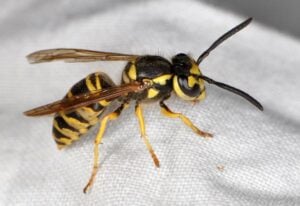
Yellow Jacket
Vespula species
The most common and aggressive wasp in Vancouver. Nests in wall voids, underground, and under decks. Colonies can reach 5,000 workers by late summer.
HIGH AGGRESSION
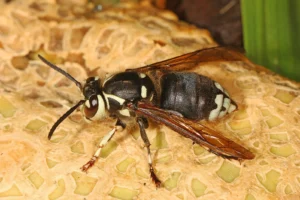
Bald-Faced Hornet
Dolichovespula maculata
Builds large grey papery nests in trees, eaves, and under rooflines. Highly defensive — will aggressively protect a 3-metre radius around the nest.
VERY HIGH AGGRESSION
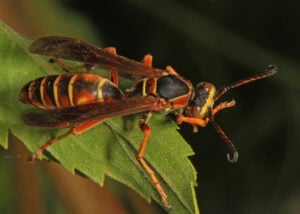
Paper Wasp
Polistes species
Builds open-comb umbrella-shaped nests under eaves, deck railings, and window frames. Smaller colonies (20–75 workers). Less aggressive but will sting if nest is touched.
MODERATE AGGRESSION
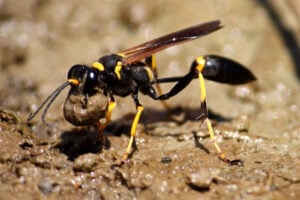
Mud Dauber
Sceliphron species
Solitary wasps that build tube-like mud nests on walls and ceilings. Generally non-aggressive and rarely sting. Easiest to treat but still best handled professionally.
LOW AGGRESSION
⚙ Our Proven Process
The 3-Step Ridall Wasp & Hornet Removal Process
We don’t just spray and leave. Every job follows a documented process designed for complete elimination and lasting prevention.

Inspection & Species ID
We locate all nest sites, identify the species, and assess colony size before any treatment begins. Species ID is critical — hornets, yellow jackets, and paper wasps each require a different approach.
✅ Full property inspection
✅ Species identification
✅ Colony size assessment
✅ Written findings provided

Targeted Treatment
We apply Health Canada–registered treatments directly to the nest. Wall voids and ground nests receive injection treatment. Aerial nests receive direct application. No broadcast spraying around your yard.
✅ Species-specific methods
✅ Injection for hidden nests
✅ Health Canada compliant
✅ Pet & child safe (post re-entry)

Nest Removal & Cleanup
Once the colony is eliminated, we remove accessible nests and dispose of them safely. For enclosed nests, physical removal may not be possible — but the colony will be fully treated.
✅ Safe nest disposal
✅ Cleanup of accessible areas
✅ Documentation of treated sites
The Ridall Experience
Choosing the right pest control company makes all the difference. See why Vancouver homeowners trust Ridall for wasp & hornet removal.
RIDALL
The Professional Choice
Many Other Companies
🕐 Response Time
Same-Day Service Available
Priority Scheduling for Urgent Issues
2–3 Business Days
👷 Technicians
Licensed & Fully Insured
Experienced Technicians (8+ Years Avg.)
Varies by contractor
🌿 Methods
Integrated Pest Management
Targeted, Health Canada–Registered Products
Usually Chemical-Only Approach
💻 Documentation
Written Report Every Visit
Prevention Guidance & Entry Point Report
Verbal Advice Only
Experience The Ridall Difference →
✓ No obligation quote • Free inspection • Fast response scheduling
Professional-Grade Equipment. Expert Technicians.
Our technicians bring an average of 8+ years of hands-on experience in wasp and hornet control across Metro Vancouver. Every team member is licensed, fully insured, and trained in professional Integrated Pest Management (IPM) practices.
⭐
Fully Licensed & Insured
$2M Liability Coverage
🎓
Ongoing Professional Training
Latest wasp & stinging insect control methods
Respectful. Clean. Professional. We treat your home like our own.
⭐ Real Customer Reviews
What Vancouver Homeowners Say
Don’t just take our word for it — see what customers say about Ridall’s wasp & hornet removal service
★★★★★
❝
G Google
“Rudy was very thorough and professional ridding my outer house of some concealed wasp nests. He explained to me what he was doing, what he found, and what to expect over the next 24 hours. The wasps were gone and not returning.”
👤
Verified Customer
Vancouver Homeowner
★★★★★
❝
G Google
“This company is excellent to work with. Prompt, detailed and on time. The man that arrived to address the wasp situation was kind, professional and explained things well. Highly recommend!”
👤
Verified Customer
Vancouver Homeowner
✔ All Verified Google Reviews ★ 5.0 Average Rating 👥 100+ Happy Customers
Join hundreds of satisfied Vancouver homeowners who trust Ridall
Frequently Asked Questions
Everything you need to know about wasp and hornet removal in Vancouver.
When is wasp season in Vancouver?
Wasp and hornet activity peaks between July and September, when colonies reach their maximum size. A nest that seems manageable in June can become a serious hazard by August.
How much does wasp nest removal cost in Vancouver?
Pricing depends on the nest location, accessibility, and treatment required. When possible, customers can send our office a photo and description of where the activity is located so we can determine the appropriate service, pricing, and availability.
What other pests are common in Vancouver homes?
Along with wasps, Vancouver homes commonly deal with rodents, ants, and cockroaches. See our full Vancouver pest control page for details.
What types of wasps are most common in Vancouver?
The four species we most commonly treat in Metro Vancouver are Yellow Jackets (Vespula species) — the most aggressive, often nesting underground or in wall voids; Bald-Faced Hornets (Dolichovespula maculata) — large grey papery nests in trees or under rooflines, very defensive; Paper Wasps (Polistes species) — smaller open-comb nests under eaves and railings, moderate aggression; and Mud Daubers (Sceliphron species) — solitary, tube-shaped mud nests on walls and ceilings, low aggression. Each species requires a different treatment approach, which is why identification always happens before we treat.
Will wasps come back to the same spot next year?
Wasps do not reuse old nests — every spring, new queens scout for suitable nesting locations and build fresh nests from scratch. However, the same spots that were attractive once (eave gaps, wall voids, dense shrubs, ground burrows) will be scouted again the following season. As part of every job, we provide a written prevention report that identifies and documents these vulnerable areas so you can seal them before the next season begins.
Do you remove the nest after treatment?
In most cases, yes. Once the colony is fully eliminated, we remove and safely dispose of accessible nests as part of the service. For nests located inside wall voids, underground, or in enclosed structural spaces, physical removal may not be possible without causing damage — but the colony will be fully treated and eliminated. Leaving a treated nest in place does not attract new wasps, as each season new queens build entirely new nests.
Is wasp treatment safe for children and pets?
Yes. Ridall uses Health Canada–registered treatments applied directly to the nest rather than broadcast-sprayed across your property. We follow all provincial pesticide application regulations. After treatment, we advise a short re-entry interval — typically 1–2 hours — before children and pets return to the treated area. Your technician will give you specific guidance based on the products used and the nest location.
How long does professional wasp removal take?
Most residential treatments take 30–60 minutes on-site. For accessible nests under eaves or in trees, you’ll typically see full results within 24–48 hours as the colony dies off. Underground nests or nests inside wall voids may require a follow-up visit 7–10 days later to confirm full elimination. Your technician will advise on expected timelines based on species and nest location at the time of inspection.
Is it dangerous to remove a wasp nest myself?
DIY removal carries serious risk and is strongly discouraged. Yellow jackets and bald-faced hornets are highly aggressive when disturbed and can sting multiple times without losing their stinger. A mature nest can contain thousands of wasps. Without professional protective equipment, the correct treatment products, and knowledge of nest type and location, disturbing a nest often triggers a mass defensive response. This is especially dangerous for anyone with a known venom allergy.
How do I know if I have a wasp nest?
The most common signs are wasps flying repeatedly in and out of a fixed location — under eaves, into a wall gap, or into a ground hole. You may also notice a visible grey or brown papery nest structure in trees, shrubs, or under rooflines. Audible buzzing from inside a wall cavity without a visible exterior nest is a key sign of yellow jackets nesting in a wall void. If you’re seeing increased wasp activity near food, garbage, or compost bins, a colony is likely nearby.
Certified, Licensed & Recognised By


Don't Wait — Wasp Nests Double in Size Every Few Weeks
A yellow jacket colony that has 50 workers in May can have 3,000+ by August. The longer you wait, the more dangerous and difficult removal becomes.
🐝
Rapid Colony Growth
5,000+ workers in a mature yellow jacket nest by late summer
⚠️
Sting Risk Increases
Serious risk for children, pets, and anyone with venom allergy
Contact Us
Complete the quick form below and one of our licensed wasp removal technicians will get back to you within 2 hours. We never share your information. Same-day service available when scheduling allows.